
How to Choose Local Influencers for Your Dealership
5 min read · Influverse · Ahmedabad
How to Choose Local Influencers for Your Dealership
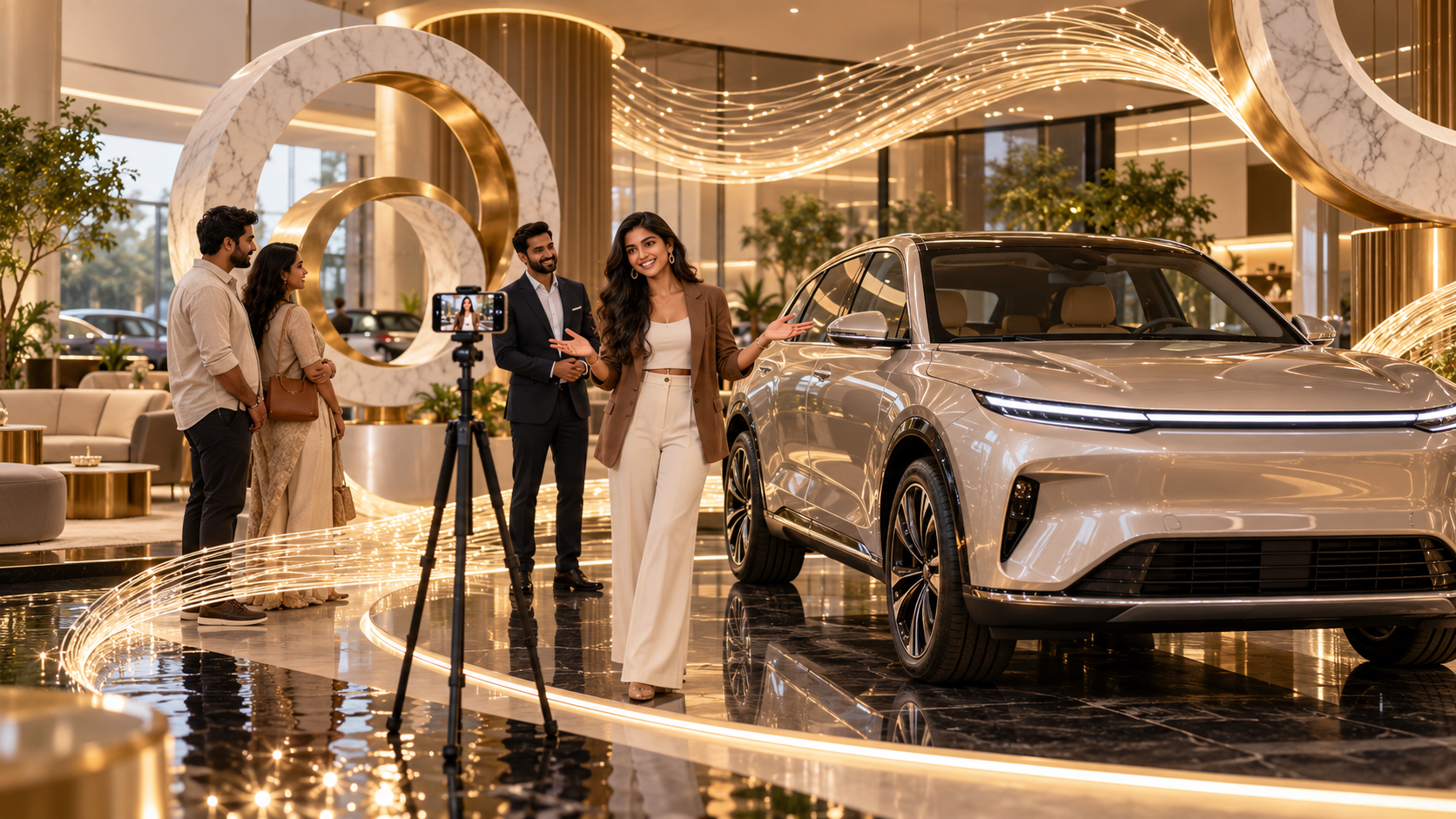
A creator can live five minutes from your showroom while most of their followers live in other cities. That creates an expensive mismatch for a dealership whose customers usually come from a defined local catchment. For dealer principals and marketing teams, creator selection should begin with the people who can realistically visit the branch.
This guide explains how to choose influencers for an automobile dealership campaign using evidence you can review before committing a budget. It covers audience checks, a selection scorecard, paid pilots and the showroom outcomes that should determine which creators you work with again.
Build Your Shortlist Around the Dealership’s Buyers
Define the branch and buyer profile
Start with your showroom’s actual customer base.
Review where recent buyers live, which languages they use with the sales team and what questions they ask before arranging a test drive. Separate different purchase needs, such as a family considering an SUV and a first-time buyer looking for a commuter motorcycle.
A creator brief for a Mahindra dealership serving families in Jaipur should address a different buying conversation from one for a two-wheeler showroom near a Bengaluru office district.
Choose the creator’s role
Decide what the creator needs to contribute:
- Automotive explanation: Demonstrate features and explain approved variant differences.
- Local discovery: Introduce the branch, location and showroom experience.
- Everyday use: Show the vehicle in a situation relevant to the intended buyer.
- Event invitation: Explain a showroom launch or scheduled test-drive opportunity.
Use these follower tiers to organise candidates:
- Nano: 1k–10k followers.
- Micro: 10k–100k followers.
- Macro: 100k–1M followers.
Apply the same quality checks to every tier. A larger account should justify its cost through relevant reach, useful creative work or a specific campaign role.
Use an evidence-based scorecard
The following weighting is a practical starting point for your team:
| Selection Factor | Suggested Weight | Evidence to Review |
|---|---|---|
| Audience in the served area | 30% | Recent audience-location insights |
| Buyer and vehicle relevance | 25% | Comparable content and purchase questions |
| Audience quality | 20% | Meaningful comments and consistent performance |
| Creative clarity | 15% | Accurate, understandable demonstrations |
| Delivery reliability | 10% | References, timelines and reporting examples |
Score each factor from one to five and record the evidence behind the score. Mark missing evidence clearly rather than filling gaps with assumptions.
For more detail, read Influverse’s guide to choosing creators by audience quality.
Share the addresses of all your showrooms with Influverse. We’ll find relevant local creators for each location and send you a shortlist. You review the options and select the creators you want to work with before campaign planning begins.
Validate Creators Before Signing the Campaign
Step 1: Build a shortlist with distinct roles
Start with auto and mobility creators, then consider relevant local lifestyle and community creators.
Avoid selecting several accounts simply because they produce similar vehicle montages. Choose people who can answer different questions within the same buying journey.
Step 2: Request recent audience evidence
Ask for dated audience-location insights and results from comparable content.
A high audience share in Mumbai does not prove that viewers are concentrated around your specific branch. Where the available data cannot isolate your catchment, record that limitation and test local response through the campaign.
Step 3: Review consistency and comment quality
Inspect a comparable set of recent posts rather than the creator’s best-performing Reel.
Separate giveaways, paid distribution and unusual viral posts. Look for specific questions, local references and relevant conversations.
Repeated generic comments deserve investigation, but they do not establish fraud by themselves.
Step 4: Check creative and operational fit
Ask the creator to explain an approved vehicle feature in their own words.
Confirm filming availability, local travel, revisions, disclosure, publication dates and reporting. Discuss any competing dealership commitments before signing.
Step 5: Run a manageable paid pilot
A sample ₹50,000 planning budget could include:
| Budget Item | Allocation |
|---|---|
| Three creator packages | ₹24,000 |
| Production and local travel | ₹6,000 |
| Local paid distribution | ₹10,000 |
| Tracking and reporting | ₹5,000 |
| Coordination and contingency | ₹5,000 |
| Total | ₹50,000 |
Confirm taxes, management charges and usage rights before approving the final cost.
Give creators comparable briefs and separate tracking links so the pilot produces useful selection evidence.
Compare Creators Using Consistent Metrics
Use these ranges as preliminary planning assumptions and validate them against shortlisted creators’ recent results.
| Creator Tier | Typical Follower Range | Expected Post-Rate | Avg. Reel Engagement Rate |
|---|---|---|---|
| Nano | 1K – 10K | 85% - 95% | 4.0% – 7.5% |
| Micro | 10K – 100K | 75% - 85% | 2.5% – 4.5% |
| Macro | 100K – 1M | 60% - 75% | 1.5% – 2.5% |
Post-rate means the share of confirmed creators publishing agreed content by the deadline. Paid contracts should require every agreed deliverable.
Calculate Reel engagement as likes, comments, saves and shares divided by followers at publication, multiplied by 100. Keep paid and organic results separate.
Let showroom outcomes influence renewal
Suppose Creator A’s allocated campaign cost is ₹15,000 and produces ten qualified enquiries and four attended test drives. Creator B costs ₹25,000 and produces 25 qualified enquiries but only two attended drives.
Their results would be:
| Metric | Creator A | Creator B |
|---|---|---|
| Cost per qualified enquiry | ₹1,500 | ₹1,000 |
| Cost per attended test drive | ₹3,750 | ₹12,500 |
The cheaper enquiry does not automatically produce the cheaper showroom outcome.
Before choosing a winner, review lead quality, vehicle availability, follow-up and eventual bookings. Small samples need careful interpretation.
Related deep dive: B2B Influencer Marketing in India: The 2026 LinkedIn & Creator Playbook.
Common Pitfalls to Avoid in India
Confusing creator location with audience location
Treat residence as a discovery clue. Use audience evidence and campaign enquiries to assess local relevance.
Treating an automated score as a final verdict
Audience-quality tools can highlight concerns, but manual review and recent evidence remain necessary.
Ignoring disclosure practices
Check that sponsored content uses prominent recognised labels such as #Ad or #Collaboration, following ASCI’s guidelines.
Leaving delivery and compensation unclear
Put paid or barter terms, deadlines, revisions and rights in writing. A showroom invitation alone does not establish a publishing commitment.
The Bottom Line
The right creator shortlist should be supported by local audience evidence, relevant content and reliable execution. Follower tiers help organise the search; the dealership’s buyers and commercial objectives should determine the selection.
Start with a small paid pilot and review the complete journey from enquiry to delivery. Share your dealership addresses and creator brief with Influverse to receive a local shortlist your team can review and select from.
Frequently asked questions
What about: Build Your Shortlist Around the Dealership’s Buyers?+
<strong>Define the branch and buyer profile</strong>
What about: Validate Creators Before Signing the Campaign?+
<strong>Step 1: Build a shortlist with distinct roles</strong>
What about: Compare Creators Using Consistent Metrics?+
Use these ranges as preliminary planning assumptions and validate them against shortlisted creators’ recent results.
What about: Common Pitfalls to Avoid in India?+
<strong>Confusing creator location with audience location</strong>
Keep reading
 Food, D2C & Retail
- Food, D2C & Retail
- Strategy & Agency Guides
Influencer Marketing Ideas for Restaurants & Cafes in Ahmedabad
 Food, D2C & Retail
- Food, D2C & Retail
- Strategy & Agency Guides
How D2C Brands Can Scale Faster With Instagram Creators
 Strategy & Agency Guides
- Strategy & Agency Guides
- Food, D2C & Retail
How Influencers Help Brands Go Viral on Instagram
 Strategy & Agency Guides
- Strategy & Agency Guides
- Food, D2C & Retail
How Influencer Agencies Manage Brand Collaborations End-to-End (Behind the Curtain)
- Food, D2C & Retail
- Strategy & Agency Guides
How Influencers Help E-commerce Brands Increase Repeat Purchases (Not Just First Orders)
 Food, D2C & Retail
- Food, D2C & Retail
- Strategy & Agency Guides