
Beauty Influencer Marketing in India: The 2026 Brand Playbook
12 min read · Influverse · Ahmedabad
Beauty Influencer Marketing in India: The 2026 Brand Playbook
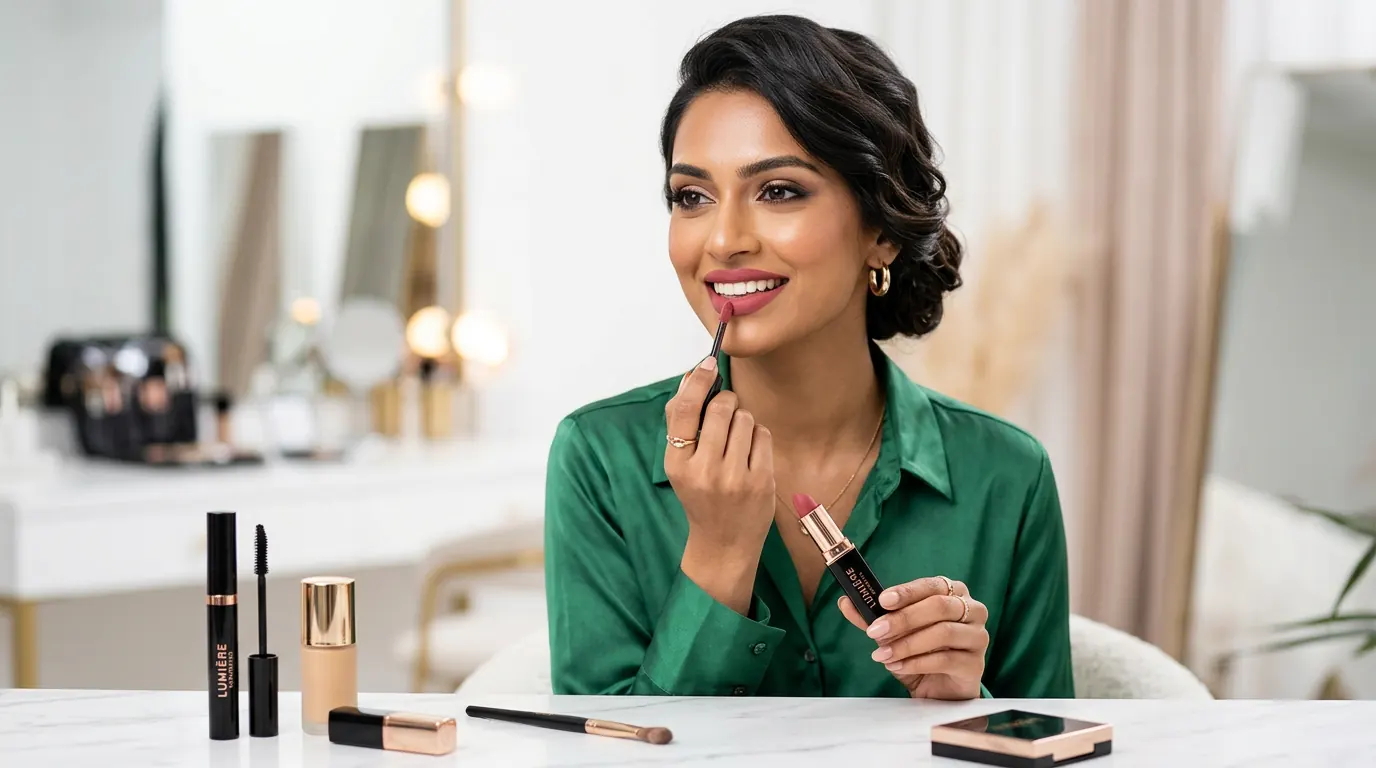
Beauty and skincare is the single most creator-dependent consumer category in India. A 2026 Indian beauty buyer — Gen-Z in Delhi, a Mumbai working professional, a tier-2 college student in Indore — does not open a brand's Instagram before they buy. They open a creator's Reel, a GRWM video, a swatch comparison and a 90-second tutorial. Brand content informs; creator content converts.
This guide is the beauty-specific playbook we run for D2C skincare, colour cosmetics, haircare and fragrance clients out of our Ahmedabad studio. Every recommendation is calibrated for Indian skin tones, the ASCI advertising code, ₹-denominated D2C economics and the operational realities of running creator programmes for a category where shade and skin-type matching is non-negotiable.
Shade-matched seeding: the foundation of every beauty creator programme
Generic 'PR boxes' sent to 200 creators are the lowest-ROI activity in Indian beauty marketing. Shade-matched, skin-type-matched seeding to 40 carefully selected creators outperforms it by an order of magnitude. The mechanic is simple: before you ship a single product, you maintain a creator database with skin tone (Fitzpatrick or a custom 1–8 scale), undertone, skin type, hair texture, regional climate and content style. Every PR push then matches the right product variant to the right creator.
This sounds operationally heavy and it is — but it is also why the top Indian D2C beauty brands have built dedicated 'creator ops' teams. The payoff is a seeding hit rate (creators who post organically within 30 days of receiving the product) of 35–55%, versus the 8–12% industry default for un-targeted seeding. On a category where every organic post is worth more than ₹15,000 in equivalent paid reach, the ROI math is overwhelming.
Format playbook: GRWM, tutorial, swatch, before-and-after, first-impression
Five formats do almost all the work in Indian beauty creator marketing. GRWM (Get Ready With Me) — the highest-engagement format, perfect for everyday wear products. Tutorial — best for technical products requiring application skill (eyeliner, contour, complex skincare routines). Swatch / shade comparison — the conversion workhorse for foundation, concealer, lipstick. Before-and-after — the strongest format for skincare and treatment products, but the most ASCI-sensitive. First-impression — best for launch buzz and new SKU awareness.
Match the format to the buying objection. If buyers worry 'will this shade work on my skin tone?' — swatch. If they worry 'will I be able to apply this?' — tutorial. If they worry 'does this actually work?' — before-and-after with a realistic timeframe. The brief should specify the objection you are addressing, then let the creator pick the exact treatment.
Related deep dive: Best Beauty Influencers in India (2026): Categories, Tiers and Who to Partner With.
ASCI compliance for Indian beauty creator content
Every beauty creator placement in India must comply with the ASCI Influencer Guidelines and the broader ASCI Code. Two non-negotiable rules: every paid partnership must carry a clear, upfront disclosure (#ad, #sponsored, 'Paid partnership with' label — placed where the viewer sees it before consuming the content, not buried in a hashtag wall), and every product claim must be substantiable. 'Brightens skin in 7 days', 'reduces pigmentation', 'clinically proven' — all of these require documented evidence in your file, and creators must not exceed what the evidence supports.
Specific category traps to brief against: anti-ageing claims that imply medical outcomes, fairness/lightening claims that fall foul of the 2022 advisory, 'chemical-free' or '100% natural' claims that are scientifically false, and any therapeutic claim (acne treatment, eczema relief) that drifts into drug territory. Every brief should ship with an approved-claims list and a forbidden-claims list, and contracts should make the creator responsible for off-brief claims.
An Indian beauty brand that gets ASCI compliance wrong does not get a warning email — they get a Twitter pile-on, a CCPA notice and a 48-hour content takedown that wipes out the campaign's reach. Treat compliance as a Day-1 deliverable, not a Day-30 review.
What Indian beauty creator campaigns cost (₹ ranges by tier)
All figures are 2026 ballpark ranges and should be treated as estimates until a real conversation. Nano beauty creators (5k–25k): seeded for product value, paid Reels ₹6,000–₹25,000. Micro (25k–250k): Reels ₹20,000–₹1.2 lakh, GRWM ₹40,000–₹2 lakh, tutorial ₹60,000–₹2.5 lakh. Mid-tier (250k–1M): Reels ₹1–4 lakh, dedicated content ₹2–6 lakh. Mega beauty creators (1M+): Reels ₹3–10 lakh, dedicated content ₹5–18 lakh.
Three Indian-market dynamics: tier-2 city creators (Lucknow, Indore, Chandigarh) typically command 25–40% lower rates than the equivalent Mumbai/Delhi creator and frequently convert better for mass-premium SKUs in their region. Regional-language beauty creators in Tamil, Telugu and Bengali are dramatically under-priced relative to their conversion power. Festive-season rates (Sep–Nov, plus wedding-season Nov–Feb) run 30–50% above off-season — plan budgets accordingly. Model the whole programme through /tools/influencer-pricing before sign-off.
Whitelisting and creator-as-ad-creative for beauty D2C
The highest-ROI move in Indian beauty creator marketing in 2026 is converting organic creator content into paid social ads via whitelisting (running ads through the creator's own handle with their permission). A whitelisted GRWM ad on a 180k-follower Mumbai creator typically outperforms a brand-handle ad by 2.5–4x on conversion rate at the same media spend, because the buyer sees the content as a creator recommendation rather than a brand pitch.
Build whitelisting into every contract above ₹40,000. The standard structure: content fee + 90-day whitelisting rights + optional 90-day extension at 25% of the original fee. Brands that try to negotiate whitelisting out 'to save 30%' lose 200% of that saving in worse paid-ads CACs over the following quarter. It is the single most-skipped, highest-leverage clause in the Indian beauty contract template.
Measurement: ROAS, repeat-purchase and creator-by-creator margin
The right beauty measurement frame is three-layered. Layer 1 (campaign-level): ROAS on the whitelisted paid budget tied to each creator's content. Layer 2 (creator-level): organic-attributed sales via unique discount codes and creator-specific UTMs on swipe-ups and link-in-bios. Layer 3 (cohort-level): 60- and 90-day repeat-purchase rate of customers acquired via each creator — this is the metric that separates a creator who drives one-time clearance buyers from one who drives lifetime customers.
Track all three and you will find the surprising insight every Indian beauty brand we work with eventually discovers: the creator with the highest Day-1 ROAS is rarely the creator with the highest 90-day customer LTV. Optimising only for Day-1 ROAS quietly erodes contribution margin for two quarters before anyone notices. The 90-day LTV view is what should drive next-quarter creator selection.
The Bottom Line
Beauty in India is the category where creator marketing has fully overtaken brand-led media as the primary growth engine. The D2C beauty brands compounding here are the ones running shade-matched seeding as a permanent operations function and whitelisting every creator asset by default.
Building or scaling an Indian beauty creator programme? Book a beauty strategy consultation at /contact and Influverse will scope your seeding pipeline, creator slate and whitelisting stack end-to-end.
Frequently asked questions
Why beauty creator content outperforms paid social in India?+
Indian beauty buyers in 2026 do something paid social cannot replicate: they watch the product on a face that resembles theirs before they decide. Skin tone, undertone, skin type, age range, regional climate — all of these vary so widely across India that a single brand-shot model is functionally useless as a purchase trigger. A creator with the buyer's skin tone in the buyer's climate doing a 60-second swatch is the entire conversion event.
What about: Shade-matched seeding: the foundation of every beauty creator programme?+
Generic 'PR boxes' sent to 200 creators are the lowest-ROI activity in Indian beauty marketing. Shade-matched, skin-type-matched seeding to 40 carefully selected creators outperforms it by an order of magnitude. The mechanic is simple: before you ship a single product, you maintain a creator database with skin tone (Fitzpatrick or a custom 1–8 scale), undertone, skin type, hair texture, regional climate and content style. Every PR push then matches the right product variant to the right creator.
What about: Format playbook: GRWM, tutorial, swatch, before-and-after, first-impression?+
Five formats do almost all the work in Indian beauty creator marketing. GRWM (Get Ready With Me) — the highest-engagement format, perfect for everyday wear products. Tutorial — best for technical products requiring application skill (eyeliner, contour, complex skincare routines). Swatch / shade comparison — the conversion workhorse for foundation, concealer, lipstick. Before-and-after — the strongest format for skincare and treatment products, but the most ASCI-sensitive. First-impression — best for launch buzz and new SKU awareness.
What about: ASCI compliance for Indian beauty creator content?+
Every beauty creator placement in India must comply with the ASCI Influencer Guidelines and the broader ASCI Code. Two non-negotiable rules: every paid partnership must carry a clear, upfront disclosure (#ad, #sponsored, 'Paid partnership with' label — placed where the viewer sees it before consuming the content, not buried in a hashtag wall), and every product claim must be substantiable. 'Brightens skin in 7 days', 'reduces pigmentation', 'clinically proven' — all of these require documented evidence in your file, and creators must not exceed what the evidence supports.
What Indian beauty creator campaigns cost (₹ ranges by tier)?+
All figures are 2026 ballpark ranges and should be treated as estimates until a real conversation. Nano beauty creators (5k–25k): seeded for product value, paid Reels ₹6,000–₹25,000. Micro (25k–250k): Reels ₹20,000–₹1.2 lakh, GRWM ₹40,000–₹2 lakh, tutorial ₹60,000–₹2.5 lakh. Mid-tier (250k–1M): Reels ₹1–4 lakh, dedicated content ₹2–6 lakh. Mega beauty creators (1M+): Reels ₹3–10 lakh, dedicated content ₹5–18 lakh.
Keep reading
 Travel & Tourism
Travel Influencer Marketing Agency: Campaigns That Drive Bookings
 EdTech
Influencer Marketing for EdTech & Coaching Institutes in India
FinTech Influencer Marketing in India: SEBI-Compliant Campaigns
 Real Estate
Real Estate Influencer Marketing: Drive Qualified Site Visits
 B2B
B2B