
Best Beauty Influencers in India (2026): Categories, Tiers and Who to Partner With
11 min read · Influverse · Ahmedabad
Best Beauty Influencers in India (2026): Categories, Tiers and Who to Partner With
The Indian beauty creator market in 2026 does not behave as a single category. Skincare buyers trust dermatologist-adjacent creators; makeup buyers trust artist creators; haircare buyers trust texture-native creators; fragrance buyers trust lifestyle creators. A brand treating this as one market and picking a 'top 10 beauty influencers' list off Google is almost certainly briefing the wrong creators for their SKU.
This guide is a category-by-category view of where the actual conversion sits in Indian beauty influencer marketing in 2026, the tier economics that make campaigns work, and the partnership shapes brands should be structuring instead of one-off Reels.
Note on the 'best of' framing: Influverse doesn't independently rank creators; the profiles referenced here are archetypes and category leaders based on public engagement signals, not a paid ranking. Brands should always run their own vetting against fraud, brand-safety and audience-quality metrics before signing any partnership.
Skincare: dermatologist-adjacent creators drive conversion
The single strongest conversion signal in Indian skincare influencer marketing is dermatologist or dermatology-adjacent credibility. Creators who reference actives (retinoids, niacinamide, azelaic acid) accurately and demonstrate patch-test discipline consistently outperform pure-aesthetic creators on attributable Shopify revenue by a factor of 2–4x.
The tier structure that works: 2–3 macro dermat creators as brand-credibility anchors, 6–10 micro dermat-aware creators for weekly review cadence, 15–25 nano creators for ingredient-education UGC. Budget split roughly 40/40/20.
Makeup: artist creators and Gen Z tutorial specialists
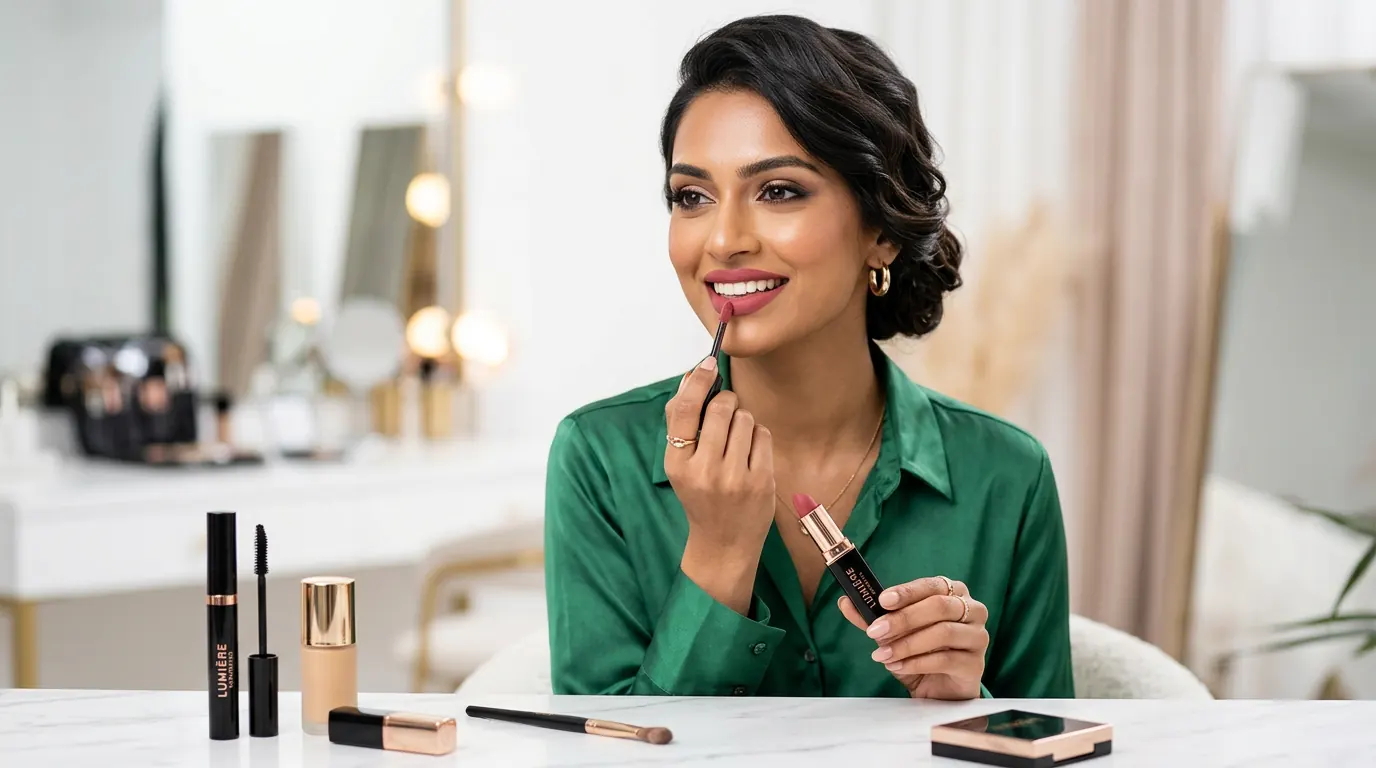
The makeup category splits sharply between two audiences — the aesthetic-first Gen Z audience that lives on Reels and the technique-first audience that lives on YouTube. A brand launching a lipstick range needs both: Reels-native creators for launch reach, YouTube-native artist creators for pigment-and-longevity credibility.
The mistake most makeup brands make is over-indexing on macro Reels creators and under-investing in YouTube artist creators, whose reviews continue driving search traffic for 12–24 months after publish.
Haircare: texture-native creators for the Indian market
The Indian haircare influencer landscape has matured around texture — wavy, curly, coily creators who reference porosity, protein-moisture balance and wash-day routines authentically. Brands that partner with texture-native creators for texture-specific SKUs consistently outperform brands running one-size-fits-all creator briefs.
The strongest performing partnership shape is a 90-day 'transformation series' — a creator uses the product exclusively for three months and publishes progress content on a fixed cadence. This out-converts one-off Reels by 5–8x on attributable revenue.
Related deep dive: Beauty Influencer Marketing in India: The 2026 Brand Playbook.
Fragrance: lifestyle creators, not beauty creators
Fragrance is the beauty sub-category most consistently mis-briefed. Traditional beauty creators struggle to demonstrate a scent through a Reel; lifestyle creators — travel, hospitality, fashion — do a materially better job because scent is naturally an accessory to the lifestyle content they already produce.
The strongest fragrance campaigns in 2026 pair a small anchor of niche perfumery-literate creators (for credibility) with a broad amplification layer of lifestyle creators (for reach and occasion-mapping).
Tier economics across the beauty category in 2026
Nano beauty creators (5k–30k): ₹4k–₹18k per Reel + product. Micro (30k–150k): ₹18k–₹90k. Macro (150k–800k): ₹90k–₹6L. Mega (800k+): ₹6L–₹35L. YouTube dedicated reviews add a 2–3x premium over Reels rates. Whitelisting rights add 30–60% over base talent fees.
Every one of these tiers has a role in a well-designed beauty programme. Brands that run macro-only programmes leave nano-tier conversion economics on the table; brands that run nano-only programmes lack the credibility anchor macros provide.
How to structure a 90-day beauty influencer programme
Weeks 1–4: 2 macro anchors publish launch content, 6 micro creators seed category education, 15 nano creators start weekly UGC. Weeks 5–8: paid whitelisting of top-performing organic assets, 90-day transformation series creators publish month-1 update, 4 YouTube dedicated reviews go live. Weeks 9–12: retargeting the warm cohort, month-2 transformation updates, launch-window PR wave using aggregated creator content.
Budget shape for a mid-market Indian beauty brand: ₹32L–₹55L for a 90-day programme structured this way, delivering 8–14M reach, 3–6% attributed revenue lift and a first-party warm cohort of 40k–80k retargetable users.
The Bottom Line
The best beauty influencers in India in 2026 are the ones that match your specific sub-category, tier and campaign shape — not the ones sitting on top of a generic 'top influencers' list. Brands that structure programmes around category fit and tier economics consistently out-perform brands chasing macro reach in beauty.
Influverse runs managed beauty influencer programmes across skincare, makeup, haircare and fragrance for Indian brands. Request a proposal and we will send a category-fit creator slate, tier split and 90-day plan inside 72 hours.
Frequently asked questions
What about: Skincare: dermatologist-adjacent creators drive conversion?+
The single strongest conversion signal in Indian skincare influencer marketing is dermatologist or dermatology-adjacent credibility. Creators who reference actives (retinoids, niacinamide, azelaic acid) accurately and demonstrate patch-test discipline consistently outperform pure-aesthetic creators on attributable Shopify revenue by a factor of 2–4x.
What about: Makeup: artist creators and Gen Z tutorial specialists?+
The makeup category splits sharply between two audiences — the aesthetic-first Gen Z audience that lives on Reels and the technique-first audience that lives on YouTube. A brand launching a lipstick range needs both: Reels-native creators for launch reach, YouTube-native artist creators for pigment-and-longevity credibility.
What about: Haircare: texture-native creators for the Indian market?+
The Indian haircare influencer landscape has matured around texture — wavy, curly, coily creators who reference porosity, protein-moisture balance and wash-day routines authentically. Brands that partner with texture-native creators for texture-specific SKUs consistently outperform brands running one-size-fits-all creator briefs.
What about: Fragrance: lifestyle creators, not beauty creators?+
Fragrance is the beauty sub-category most consistently mis-briefed. Traditional beauty creators struggle to demonstrate a scent through a Reel; lifestyle creators — travel, hospitality, fashion — do a materially better job because scent is naturally an accessory to the lifestyle content they already produce.
What about: Tier economics across the beauty category in 2026?+
Nano beauty creators (5k–30k): ₹4k–₹18k per Reel + product. Micro (30k–150k): ₹18k–₹90k. Macro (150k–800k): ₹90k–₹6L. Mega (800k+): ₹6L–₹35L. YouTube dedicated reviews add a 2–3x premium over Reels rates. Whitelisting rights add 30–60% over base talent fees.
Keep reading
 Local Marketing
How Influencer Marketing Helps Brands Dominate Local Markets (Pincode-Level Strategy)
 Analytics
Influencer Campaign Metrics Every Brand Should Track (Beyond Likes and Reach)
 Content Strategy
Why Authentic Influencer Content Outperforms Scripted Promotions (Every Single Time)
 Jewellery
Influencer Marketing for Jewellery Brands in Gujarat (The High-AOV Playbook)
 Startup Marketing
How Influencers Create Social Proof for New Businesses (The First 90 Days)
 Offline Conversion