
Jewellery Store Launch: A 30-Day Influencer Plan
3 min read · Influverse · Ahmedabad
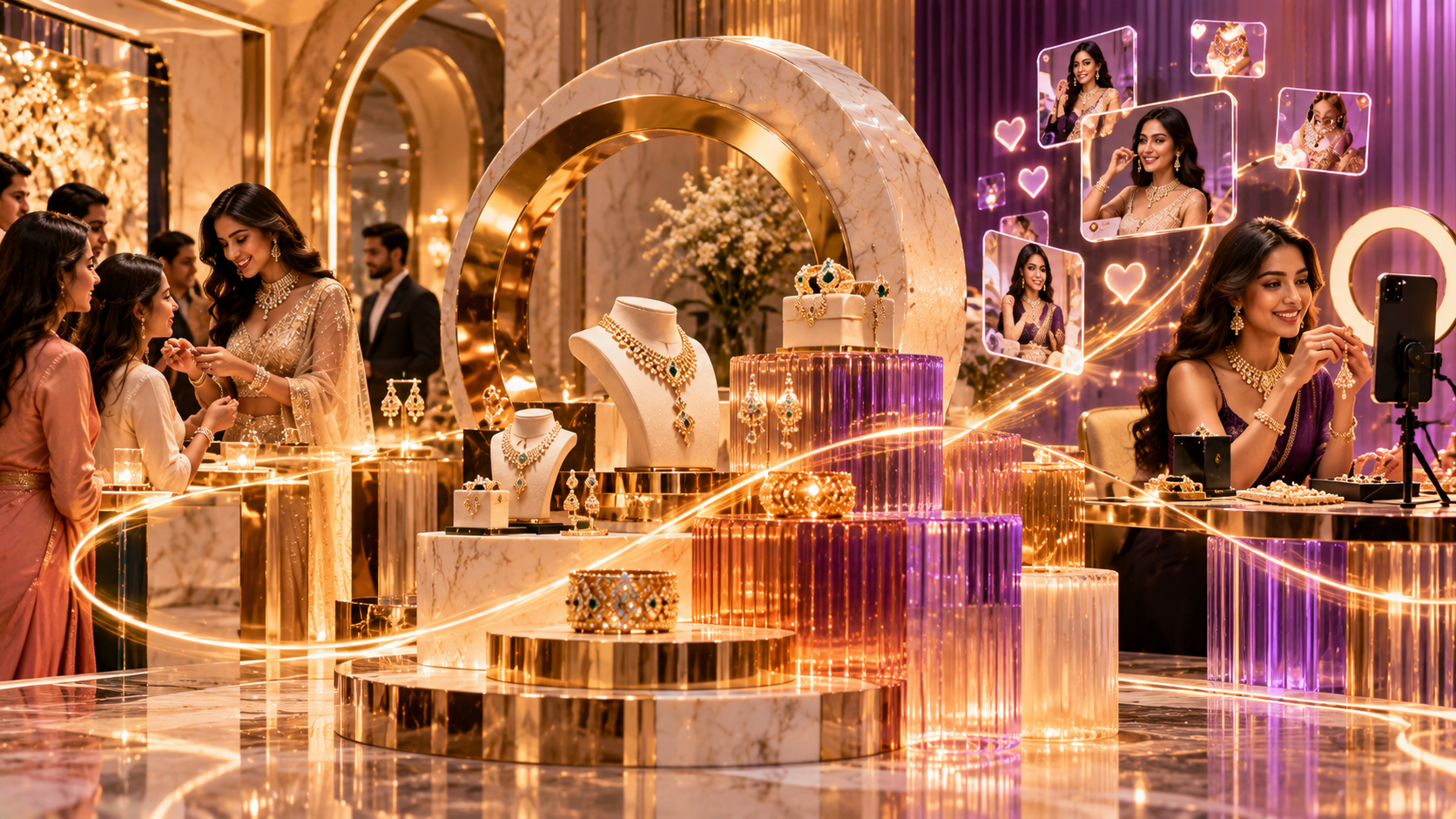
Jewellery Store Launch: A 30-Day Influencer Plan
A crowded opening day can make a new jewellery showroom look successful before the appointment pipeline is established. Guests, suppliers and creator entourages all add to the room, but the branch still needs relevant buyers returning after the launch.
This 30-day jewellery store launch influencer plan focuses on the first month of public trading. It connects local discovery, collection demonstrations and appointment follow-up to verified visits and completed purchases.
Prepare the Launch Before Day One
Confirm the customer-facing basics
Finalise the location, map pin, opening hours, available collections and enquiry route.
Check adviser capacity, product information and any launch-offer conditions. Publish only the experience the store is ready to deliver.
Assign distinct creator jobs
| Creator Role | Launch Contribution |
|---|---|
| Local guide | Explain where the showroom is and how to visit |
| Collection presenter | Show relevant designs and product details |
| Bridal creator | Explain the consultation experience |
| Event host | Support an agreed opening activity |
A hosting fee does not automatically include content production or publication.
Use Nano at 1k–10k followers, Micro at 10k–100k and Macro at 100k–1M, then review local audience evidence.
Agree on the shortlist and scope
Share your showroom address, opening date, collections, appointment capacity and budget with Influverse. We’ll find relevant creators and send a shortlist for you to review and select before the launch schedule is finalised.
For wider regional context, consult the existing Gujarat jewellery playbook.
Execute the First 30 Days
Step 1: Days 1–7 — Introduce the branch
Publish clear location and collection content.
Show the entrance, relevant landmarks, customer experience and appointment route. Distinguish event invitations from product consultations.
At the opening, record invited guests separately from qualified prospects.
Step 2: Days 8–14 — Demonstrate reasons to return
Use creators to explain selected collections and common buyer questions.
Offer appointments where an adviser can prepare suitable pieces. Avoid relying entirely on opening-event footage once the event has passed.
Step 3: Days 15–21 — Follow up with interested prospects
Contact customers through the channel and for the purpose they agreed to.
Arrange return visits where the initial visit was crowded or the requested collection was unavailable. Record the next action in the lead record.
Step 4: Days 22–30 — Publish answers and review results
Use recurring questions to guide new content.
Review creator performance, appointment attendance and completed sales. Identify operational problems before committing to another round of distribution.
Step 5: Maintain accurate availability
Check featured pieces and offers before every scheduled publication.
If a piece sells or a condition changes, update the destination page and brief the team handling enquiries.
Measure the Launch Beyond the Event Crowd
A sample ₹2,50,000 campaign allocation could include:
| Budget Item | Allocation |
|---|---|
| Creator fees | ₹1,00,000 |
| Production and logistics | ₹40,000 |
| Paid distribution | ₹55,000 |
| Usage rights | ₹20,000 |
| Appointment support and measurement | ₹35,000 |
| Total | ₹2,50,000 |
Venue fit-out, hospitality and any additional taxes or services should be priced separately where applicable.
Suppose the campaign generates 100 qualified enquiries, 50 confirmed appointments, 30 attended visits and ten completed purchases.
- Cost per qualified enquiry: ₹2,500.
- Cost per attended visit: approximately ₹8,333.
- Cost per completed purchase: ₹25,000.
- Appointment show-up rate: 60%.
Keep a day-30 snapshot and follow the same cohort later. Some prospects will still be making a decision.
Related deep dive: Jewellery Store Launch in a New City: A 30-Day Plan.
Common Pitfalls to Avoid in India
Announcing an experience before the store is ready
Confirm staffing, collections and appointment availability.
Reporting every attendee as a lead
Keep guests, vendors and prospects separate.
Leaving appearance and content obligations unclear
Contract attendance, filming, posting and rights individually.
Overlooking disclosure and product handling
Follow ASCI’s guidelines and document loaned pieces and return arrangements.
The Bottom Line
The launch should establish a showroom people understand and can confidently revisit. Creators introduce the branch, while prepared advisers and consistent follow-up build the sales pipeline.
Share your jewellery showroom launch brief with Influverse to select local creators and plan the first month around verified visits.
Frequently asked questions
What about: Prepare the Launch Before Day One?+
<strong>Confirm the customer-facing basics</strong>
What about: Execute the First 30 Days?+
<strong>Step 1: Days 1–7 — Introduce the branch</strong>
What about: Measure the Launch Beyond the Event Crowd?+
A sample ₹2,50,000 campaign allocation could include:
What about: Common Pitfalls to Avoid in India?+
<strong>Announcing an experience before the store is ready</strong>
Keep reading
 Strategy & Agency Guides
- Strategy & Agency Guides
- Beauty, Fashion & Luxury
Red Flags in an Influencer Agency Pitch: 12 Things to Ask For
 Beauty, Fashion & Luxury
- Beauty, Fashion & Luxury
- Strategy & Agency Guides
Beauty Influencer Marketing in India: The 2026 Brand Playbook
 Beauty, Fashion & Luxury
- Beauty, Fashion & Luxury
- Strategy & Agency Guides
Fashion Influencer Marketing in India: The Wardrobe-Cycle Playbook
 Strategy & Agency Guides
- Strategy & Agency Guides
- Food, D2C & Retail
Best Influencer Marketing Strategies for Gujarati Brands in 2026
 Strategy & Agency Guides
- Strategy & Agency Guides
- Creators, Platforms & Media
- Food, D2C & Retail
Why Local Influencers Deliver Better Engagement Than Celebrities
 Food, D2C & Retail
- Food, D2C & Retail
- Strategy & Agency Guides