
Fashion Influencer Marketing in India: The Wardrobe-Cycle Playbook
12 min read · Influverse · Ahmedabad
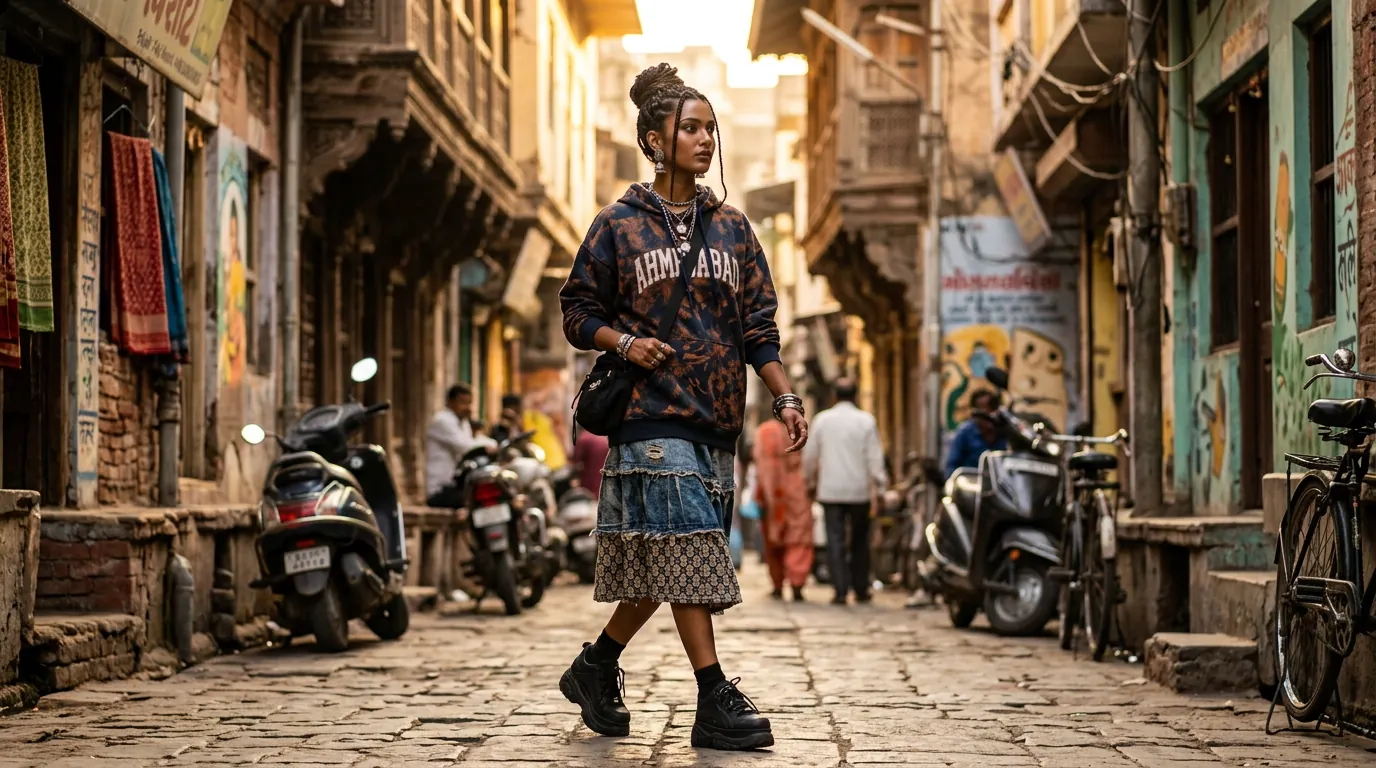
Fashion Influencer Marketing in India: The Wardrobe-Cycle Playbook
Fashion creator marketing in India runs on a fundamentally different clock from every other category. The unit of work is not a campaign — it is a drop. The measurement window is not 90 days — it is the 14–28 day sell-through window of a specific SKU. And the creator's job is not to recommend a product — it is to put it inside a styling narrative the buyer wants to recreate in her own wardrobe.
This guide is the fashion-specific playbook we run for apparel, footwear, accessories and ethnic-wear clients out of our Ahmedabad studio. Every recommendation is calibrated for Indian sizing realities, the wedding-season demand spike, festive-collection economics and the way Indian buyers actually decide between an Instagram pin and a checkout.
The wardrobe cycle: thinking in drops, not campaigns
Indian fashion brands that treat creator work as 'campaigns' under-perform brands that treat it as a continuous drop calendar. A drop calendar maps each SKU drop to a creator activation window — typically 7 days before launch (teaser content from 2–4 creators), launch day (12–20 simultaneous creator posts), and a 21-day sustain window (continued styling content from the same creator slate plus 6–10 micro-creators).
The economic payoff: tight, well-orchestrated drops sell through 60–85% of inventory in the first 21 days, leaving very little for the markdown window that destroys margin in this category. Loose, undirected creator work sells through 30–45% in the same window and forces a margin-eroding sale to clear the rest. The drop calendar is, mathematically, a margin-protection tool more than a marketing tool.
Format playbook: OOTD, styling reels, lookbook, transformation, behind-the-scenes
Five formats carry almost all the conversion in Indian fashion creator marketing. OOTD (Outfit Of The Day) — the workhorse, perfect for everyday casual and workwear. Styling reels (one piece, three ways) — highest engagement format and the strongest at communicating versatility. Lookbook — best for full-collection launches, especially festive and bridal. Transformation (before-and-after styling or boring-to-styled) — strong for accessories and statement pieces. Behind-the-scenes (creator visiting the studio, walking the collection) — best for premium and craft-led brands building category authority.
Match the format to the SKU's purchase complexity. A ₹1,200 cotton kurti needs an OOTD; a ₹45,000 lehenga needs a lookbook and a styling reel. Briefing a single format across a multi-SKU drop is one of the most common Indian fashion mistakes — different SKUs need different storytelling and the brief should be SKU-specific, not collection-wide.
Sizing, fit and the photography reality of Indian bodies
Indian fashion creator content has a credibility ceiling that brand-shot content cannot break: real bodies of varied shapes and sizes wearing the garment. A 2026 Indian buyer will scroll past three brand-shot images of a size-S model and stop on a creator-shot Reel of a size-L styling the same piece, because it answers her actual question — 'will this work on me?'.
The operational implication: your creator slate must intentionally span sizes, body shapes and heights, not default to a single aesthetic. The brands winning in India in 2026 explicitly book creators across XS to XXL, across heights 5'0" to 5'9", and across both fair-skinned and deeper Indian skin tones. Casting against the brand-shot model is the entire competitive advantage of creator content; recreating the brand shoot with influencer faces wastes the channel.
Related deep dive: Best Fashion Influencers in India (2026): Segments, Signals and How to Partner.
Wedding-season and festive economics for Indian fashion brands
Two windows do disproportionate work in Indian fashion: the festive corridor (Aug–Nov, Raksha Bandhan through Diwali) and the wedding corridor (Nov–Feb, plus the April–May regional spike). A 2026 Indian fashion brand typically does 45–65% of its annual revenue inside these two windows, and the creator strategy must be planned 90 days in advance of each.
Two wedding-season rules: (1) brief Reels at least 14 days before the wedding date the buyer is shopping for — wedding shopping in India happens on a 21–35 day lead time before the function, not the day before; (2) include at least three regional-language creators in every wedding-season slate, because the wedding wardrobe decision is overwhelmingly made in the buyer's mother tongue with her mother and sisters watching the Reel together. English-only wedding creator slates leave 40%+ of conversion on the table.
Festive-season creator rates run 35–60% above off-season. Lock contracts in July for the August–November window, not in September. Plan the budget through /tools/influencer-pricing with festive multipliers turned on.
What Indian fashion creator campaigns cost (₹ ranges by tier)
All figures are 2026 ballpark ranges and should be treated as estimates until a real conversation. Nano fashion creators (5k–25k): seeded for product value, paid Reels ₹5,000–₹22,000. Micro (25k–250k): styling Reels ₹18,000–₹1.1 lakh, OOTD ₹15,000–₹80,000, lookbook ₹50,000–₹2.5 lakh. Mid-tier (250k–1M): Reels ₹1–4 lakh, lookbook ₹2–6 lakh. Mega fashion creators (1M+): Reels ₹3–10 lakh, lookbook ₹5–18 lakh.
Three pricing dynamics: bridal and luxury fashion creators command a 30–80% category premium over equivalent-follower casualwear creators. Regional-language fashion creators (Tamil, Bengali, Gujarati, Marathi) are under-priced relative to their conversion in tier-2 and tier-3 markets. Whitelisting rights for paid amplification typically add 25–35% to the base content fee — and are essential for any drop above ₹5 lakh in spend.
Measurement: sell-through rate, return rate, creator-by-creator margin
Fashion creator measurement does not look like other categories. The three KPIs that matter: (1) 21-day sell-through rate on the SKUs featured (target 60–85% on a well-orchestrated drop), (2) return rate on creator-attributed orders (a creator whose audience returns at 18% is materially worse than one whose audience returns at 7%, regardless of top-line revenue), and (3) contribution margin per creator post-returns and post-discounts. Last-click revenue is a misleading vanity number in fashion — the returns and discount layer is what reveals the true winners.
Track all three across a 90-day window and you will surface the structural insight: in Indian fashion, mid-tier creators (300k–800k) with engaged regional audiences almost always outperform mega creators on margin-adjusted contribution per ₹ spent. The mega creators look great in the campaign report; the mid-tier creators are what actually carry the P&L.
Frequently asked fashion creator questions
How many creators per drop? 12–20 for a meaningful drop, 25–40 for a major festive or wedding collection launch.
Should we gift or pay? Both — gift the long tail of nano/micro creators for organic styling content; pay the mid-tier and above for guaranteed-deliverable Reels with usage rights.
What is the single biggest fashion creator mistake? Booking the slate two weeks before the drop. Indian fashion drops need 6–8 weeks of creator lead time to negotiate, ship samples, brief, shoot and stagger publish. Compressed timelines force expensive last-minute creator buys and undermine the drop calendar.
The Bottom Line
Fashion creator marketing in India is a category where calendar discipline, body-inclusive casting and margin-aware measurement separate the brands that compound from the brands that churn through campaigns. The brands winning in 2026 are running creator work as a permanent drop function, not a quarterly experiment.
Planning a festive or wedding-season drop? Book a fashion strategy consultation at /contact and Influverse will scope a drop calendar, creator slate and measurement model around your collection.
Frequently asked questions
What about: The wardrobe cycle: thinking in drops, not campaigns?+
Indian fashion brands that treat creator work as 'campaigns' under-perform brands that treat it as a continuous drop calendar. A drop calendar maps each SKU drop to a creator activation window — typically 7 days before launch (teaser content from 2–4 creators), launch day (12–20 simultaneous creator posts), and a 21-day sustain window (continued styling content from the same creator slate plus 6–10 micro-creators).
What about: Format playbook: OOTD, styling reels, lookbook, transformation, behind-the-scenes?+
Five formats carry almost all the conversion in Indian fashion creator marketing. OOTD (Outfit Of The Day) — the workhorse, perfect for everyday casual and workwear. Styling reels (one piece, three ways) — highest engagement format and the strongest at communicating versatility. Lookbook — best for full-collection launches, especially festive and bridal. Transformation (before-and-after styling or boring-to-styled) — strong for accessories and statement pieces. Behind-the-scenes (creator visiting the studio, walking the collection) — best for premium and craft-led brands building category authority.
What about: Sizing, fit and the photography reality of Indian bodies?+
Indian fashion creator content has a credibility ceiling that brand-shot content cannot break: real bodies of varied shapes and sizes wearing the garment. A 2026 Indian buyer will scroll past three brand-shot images of a size-S model and stop on a creator-shot Reel of a size-L styling the same piece, because it answers her actual question — 'will this work on me?'.
What about: Wedding-season and festive economics for Indian fashion brands?+
Two windows do disproportionate work in Indian fashion: the festive corridor (Aug–Nov, Raksha Bandhan through Diwali) and the wedding corridor (Nov–Feb, plus the April–May regional spike). A 2026 Indian fashion brand typically does 45–65% of its annual revenue inside these two windows, and the creator strategy must be planned 90 days in advance of each.
What Indian fashion creator campaigns cost (₹ ranges by tier)?+
All figures are 2026 ballpark ranges and should be treated as estimates until a real conversation. Nano fashion creators (5k–25k): seeded for product value, paid Reels ₹5,000–₹22,000. Micro (25k–250k): styling Reels ₹18,000–₹1.1 lakh, OOTD ₹15,000–₹80,000, lookbook ₹50,000–₹2.5 lakh. Mid-tier (250k–1M): Reels ₹1–4 lakh, lookbook ₹2–6 lakh. Mega fashion creators (1M+): Reels ₹3–10 lakh, lookbook ₹5–18 lakh.
Keep reading
 Tech
TechTech & Gadget Influencer Marketing in India: The Reviewer Playbook
 Beauty