
How Fashion Brands Use Influencers to Increase Product Sales
12 min read · Influverse · Ahmedabad
How Fashion Brands Use Influencers to Increase Product Sales
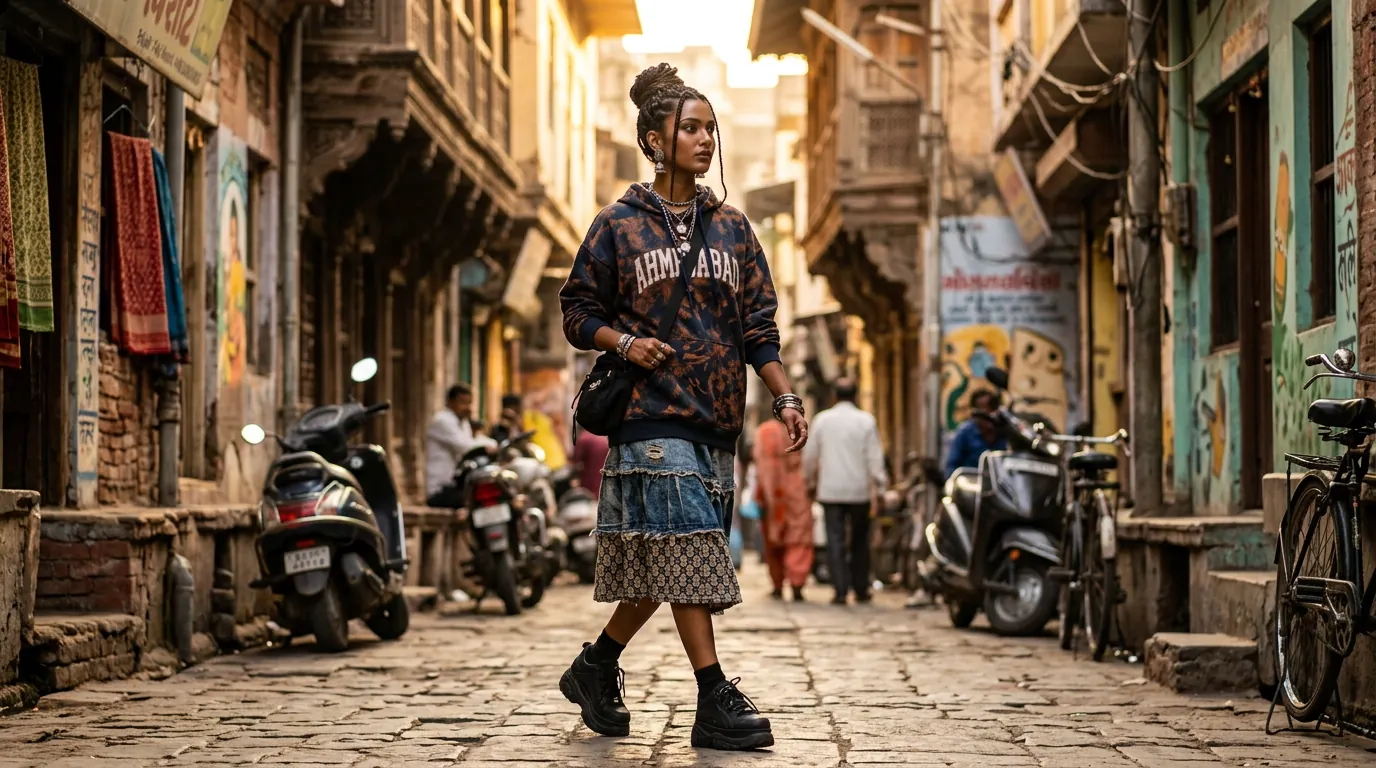
Gujarati fashion — bridal couture from Law Garden, ethnic-fusion D2C scaling out of Ahmedabad, contemporary streetwear from Surat — has a specific selling pattern. Buyers don’t buy from studio shots; they buy from styling context that helps them visualise the piece on themselves, in their actual life, at their actual events. Influencer marketing is uniquely engineered to deliver exactly that context, and the fashion brands in Gujarat doing it well are quietly clearing revenue numbers their competitors don’t believe.
Here is the playbook.
Brief for three-look transitions against Gujarat-specific backdrops.
A single ‘here is the dress’ Reel underperforms a three-look transition where the same piece is styled three different ways — work-to-wedding, day-to-night, sangeet-to-reception. The transition format is engineered for saves, which are the leading indicator of fashion conversion.
Insist on Gujarat-specific backdrops: Sabarmati Riverfront at sunset, a Bodakdev rooftop, the rangoli-decorated entrance of a real Ahmedabad home during Navratri. The location specificity is the styling context that turns a viewer into a buyer.
Route every collaboration through a shoppable Instagram catalog tag.
Every creator post must have the exact SKU tagged via Instagram Shopping. The friction collapse from ‘I love this’ to ‘I bought this’ is the entire game in fashion. Brands that make viewers leave Instagram to find the product on a separate website lose 40–60% of conversion intent in that single jump.
Set up your Instagram Shop properly, sync your full catalog, and audit weekly that every creator post is correctly tagged. This is operational discipline, not strategy — and it is where most fashion brands quietly leak revenue.
Boost the top creator post within 48 hours via whitelisting.
Fashion is a momentum category. The window between a creator publishing and the buyer deciding is 24–72 hours. By hour 48, push the top-performing creator Reel through Meta as a whitelisted Partnership Ad with a ₹50,000–₹2,00,000 budget targeting your fashion-buyer audience.
Top performers in our portfolio clear ₹4–7 lakh in attributed sales from a single ₹40,000 creator collaboration once the 48-hour whitelisting boost is layered on. Without the boost, the same Reel typically converts at 25–40% of that number.
Related deep dive: Fashion Influencer Marketing in India: The Wardrobe-Cycle Playbook.
Stack the activation around a buying moment, not a random Tuesday.
Gujarati fashion buying clusters around specific moments: pre-Navratri (August–September), pre-wedding-season (October–December), pre-Diwali (October), and pre-summer-resort (March–April). Pre-load your creator activations 21 days before each moment.
A campaign launched 3 days before Navratri converts at 4–8x a campaign launched in random June. The calendar discipline matters more than any creative cleverness.
Use micro-creators for use-case content, macro for aspirational anchor.
Structure the campaign as one macro anchor (a known fashion creator giving the campaign its visual signature) supported by 6–10 micro creators showing the pieces in real-life contexts — at work in their Prahlad Nagar office, at an actual sangeet, at brunch in Bodakdev. The macro creates desire; the micros create permission.
This is the structure that consistently converts in the Gujarat market. Macro-only campaigns generate awareness without the proof; micro-only campaigns generate proof without the aspiration.
Layer creator-led try-on Reels for high-AOV pieces.
For bridal, couture and premium ethnic — pieces above ₹15,000 AOV — the conversion driver is a creator try-on Reel showing fit, drape and movement. Static product images cannot communicate this. A 30-second try-on Reel from a trusted creator collapses the perceived purchase risk that keeps high-AOV buyers in carts.
Brands running try-on Reels on their premium SKUs typically see 2–4x higher conversion at the same paid traffic level versus brands relying on product photography alone.
Build a UGC bank from buyer-creators to perpetuate the content engine.
Identify your top 50 customers each quarter, ship them an unbranded thank-you, and offer a small barter-plus-fee for a single styling Reel of their existing purchase. Many will say yes. The resulting UGC bank is fashion content gold — real bodies, real lives, real Gujarat — that you can re-cut as paid creative for the next 6 months.
This is how scale-stage Gujarati fashion brands keep their content factory funded almost entirely from their own buyer base.
The Bottom Line
Fashion in Gujarat is won by the brands that make their pieces feel styled, contextual and inevitable on the buyer’s own life. Influencer marketing — done with shoppable tags, whitelisted boosts, festival calendars and try-on discipline — is the only channel that delivers that feeling at scale.
Influverse runs end-to-end influencer programmes for Gujarati fashion brands. Request a proposal mapped to your AOV, category and seasonal calendar, and we’ll have one in your inbox in 48 hours.
Frequently asked questions
What about: Brief for three-look transitions against Gujarat-specific backdrops?+
A single ‘here is the dress’ Reel underperforms a three-look transition where the same piece is styled three different ways — work-to-wedding, day-to-night, sangeet-to-reception. The transition format is engineered for saves, which are the leading indicator of fashion conversion.
What about: Route every collaboration through a shoppable Instagram catalog tag?+
Every creator post must have the exact SKU tagged via Instagram Shopping. The friction collapse from ‘I love this’ to ‘I bought this’ is the entire game in fashion. Brands that make viewers leave Instagram to find the product on a separate website lose 40–60% of conversion intent in that single jump.
What about: Boost the top creator post within 48 hours via whitelisting?+
Fashion is a momentum category. The window between a creator publishing and the buyer deciding is 24–72 hours. By hour 48, push the top-performing creator Reel through Meta as a whitelisted Partnership Ad with a ₹50,000–₹2,00,000 budget targeting your fashion-buyer audience.
What about: Stack the activation around a buying moment, not a random Tuesday?+
Gujarati fashion buying clusters around specific moments: pre-Navratri (August–September), pre-wedding-season (October–December), pre-Diwali (October), and pre-summer-resort (March–April). Pre-load your creator activations 21 days before each moment.
What about: Use micro-creators for use-case content, macro for aspirational anchor?+
Structure the campaign as one macro anchor (a known fashion creator giving the campaign its visual signature) supported by 6–10 micro creators showing the pieces in real-life contexts — at work in their Prahlad Nagar office, at an actual sangeet, at brunch in Bodakdev. The macro creates desire; the micros create permission.
Keep reading
 Offline Conversion
How Influencer Marketing Drives Store Footfall for Offline Businesses
 Festival Marketing
Influencer Collaboration Ideas for Festival Campaigns (Gujarat Calendar Edition)
 Content Strategy
How Brands Can Repurpose Influencer Content for Paid Ads (The Content-Multiplier Playbook)
Why Influencer Marketing Works Better for Gen Z Audiences (and How to Brief for It)
 FMCG
FMCGInfluencer Marketing for FMCG Brands: Strategies That Actually Work
 Talent Management