
Best Fashion Influencers in India (2026): Segments, Signals and How to Partner
11 min read · Influverse · Ahmedabad
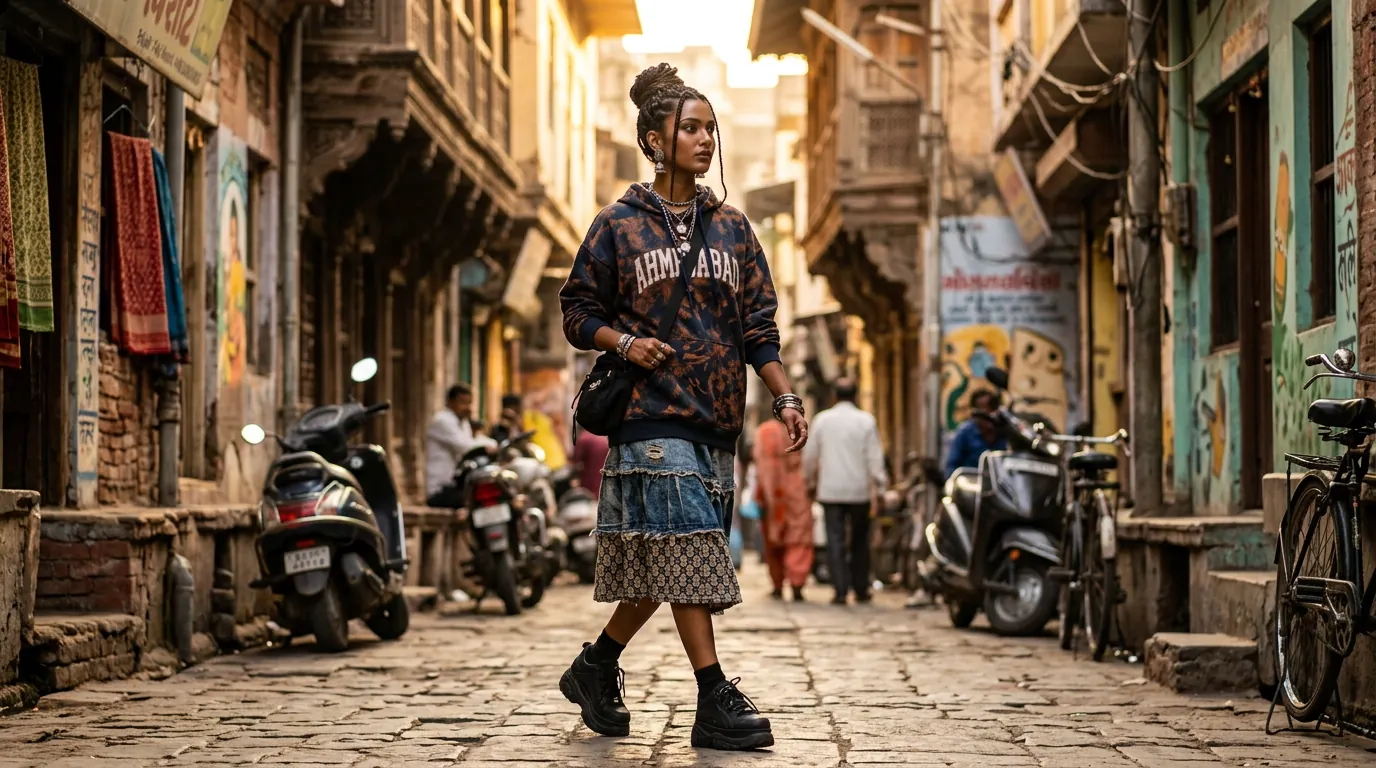
Best Fashion Influencers in India (2026): Segments, Signals and How to Partner
Fashion in India was one of the earliest categories to embrace creator marketing — and one of the last to modernise how it briefs creators. Most fashion brands in 2026 are still running campaigns as if the market is one homogeneous 'style influencer' audience, when it has clearly fragmented into five commercially distinct segments with different creator archetypes, different conversion mechanics and different tier economics.
This guide unpacks those five segments, the working partnership shapes inside each, and how brands should structure a 90-day fashion influencer programme in 2026 that respects the fragmentation instead of averaging over it.
Disclosure: this is a category and archetype guide, not a paid ranking. Every partnership should still go through independent vetting for engagement quality, brand-safety and audience authenticity.
Segment 1 — Luxury fashion creators
The Indian luxury creator segment is small (roughly 60–90 credible creators) and heavily concentrated in Mumbai, Delhi-NCR and Bangalore. Their audiences are wealthy, considered buyers with long decision cycles — the wrong tier to expect a Reel-to-purchase conversion in a week. The right shape is a quarterly editorial partnership with 2–3 anchor creators and event-led activations, not campaign-burst content.
Segment 2 — Streetwear and Gen Z fashion
Streetwear is the highest-velocity fashion sub-category in India and the one where Instagram Reels and drop-culture Discord communities are structurally reshaping distribution. Creators here are 18–26, hyper-visual, and command intense buyer trust on drops.
The working partnership shape is the drop-tied collab — a limited-edition SKU with the creator's involvement in the design, seeded three weeks pre-drop across 8–15 micro creators in the same aesthetic cluster. Drops of this shape routinely sell out inside 48 hours in the ₹8–₹35L revenue range for mid-market brands.
Segment 3 — Ethnic and occasion wear
The largest fashion segment in India by revenue and the least mature in creator marketing. Ethnic wear creators are geographically dispersed — strong clusters in Ahmedabad, Jaipur, Kolkata, Hyderabad and Chennai — and skew toward wedding and festive content with 6–8 month planning horizons.
The working partnership shape is the festive calendar campaign: 8-week rollouts synced to Navratri, Diwali, wedding season and Eid, with regional-language creator amplification layered in for tier-2 and tier-3 markets.
Related deep dive: Fashion Influencer Marketing in India: The Wardrobe-Cycle Playbook.
Segment 4 — Sustainable and slow fashion
A smaller but rapidly growing segment with disproportionate PR value. Sustainability creators command deep audience trust because their audiences vet claims — a badly-briefed 'sustainable' campaign will get called out in the comments inside 24 hours.
The working partnership shape is the transparent-supply-chain story: extended-form content (Reels carousel + YouTube long-form + blog collab) walking through fabric sourcing, production, worker conditions and pricing rationale. This shape converts because it earns trust that a lookbook Reel cannot.
Segment 5 — Modest fashion and regional-cultural fashion
The most under-served and most under-briefed segment in Indian fashion creator marketing. Modest-fashion creators (hijabi styling, regional-cultural creators, plus-size modest) command extremely loyal, purchase-ready audiences with limited alternative brand options.
The working partnership shape is the sustained ambassador programme — 6–12 month exclusivity with 3–5 creators, monthly content commitments, and dedicated capsule SKUs. Brands in this segment consistently out-return the broader fashion category on LTV.
Tier economics and 90-day programme structure
Nano fashion creators (5k–25k): ₹3k–₹15k per Reel + product. Micro (25k–150k): ₹15k–₹80k. Macro (150k–800k): ₹80k–₹5L. Mega (800k+): ₹5L–₹28L. Add 30–50% for shoot-quality production, 40–60% for whitelisting rights, and a full retainer for ambassador programmes.
A well-structured 90-day fashion programme uses 20–30% budget on 2–3 macro anchors, 40–50% on 8–15 micro creators inside the specific segment, and 20–30% on nano UGC amplification. Skip any of the three and the programme loses either credibility, conversion or reach — always predictably.
The Bottom Line
The best fashion influencers in India in 2026 are segment-specific, not universal. Luxury, streetwear, ethnic, sustainable and modest fashion each behave differently — and brands that respect the fragmentation consistently out-perform brands that don't.
Influverse runs segment-specific fashion influencer programmes across luxury, streetwear, ethnic, sustainable and modest fashion for Indian brands. Request a proposal and we will map the right segment, tier and partnership shape to your brand in 72 hours.
Frequently asked questions
What about: Segment 1 — Luxury fashion creators?+
The Indian luxury creator segment is small (roughly 60–90 credible creators) and heavily concentrated in Mumbai, Delhi-NCR and Bangalore. Their audiences are wealthy, considered buyers with long decision cycles — the wrong tier to expect a Reel-to-purchase conversion in a week. The right shape is a quarterly editorial partnership with 2–3 anchor creators and event-led activations, not campaign-burst content.
What about: Segment 2 — Streetwear and Gen Z fashion?+
Streetwear is the highest-velocity fashion sub-category in India and the one where Instagram Reels and drop-culture Discord communities are structurally reshaping distribution. Creators here are 18–26, hyper-visual, and command intense buyer trust on drops.
What about: Segment 3 — Ethnic and occasion wear?+
The largest fashion segment in India by revenue and the least mature in creator marketing. Ethnic wear creators are geographically dispersed — strong clusters in Ahmedabad, Jaipur, Kolkata, Hyderabad and Chennai — and skew toward wedding and festive content with 6–8 month planning horizons.
What about: Segment 4 — Sustainable and slow fashion?+
A smaller but rapidly growing segment with disproportionate PR value. Sustainability creators command deep audience trust because their audiences vet claims — a badly-briefed 'sustainable' campaign will get called out in the comments inside 24 hours.
What about: Segment 5 — Modest fashion and regional-cultural fashion?+
The most under-served and most under-briefed segment in Indian fashion creator marketing. Modest-fashion creators (hijabi styling, regional-cultural creators, plus-size modest) command extremely loyal, purchase-ready audiences with limited alternative brand options.
Keep reading
 Local Retail
How Local Stores Increase Footfall Through Influencer Promotions (Ahmedabad Hyperlocal Playbook)
Influencer Marketing Ideas for Retail Businesses in Ahmedabad
How Franchise Brands Use Influencers for Regional Expansion (The Region-Specific Creator Playbook)
Influencer Marketing Strategies for Multi-Location Businesses
 EV & Energy