
Makeup Influencer Marketing That Drives Product Trials
4 min read · Influverse · Ahmedabad
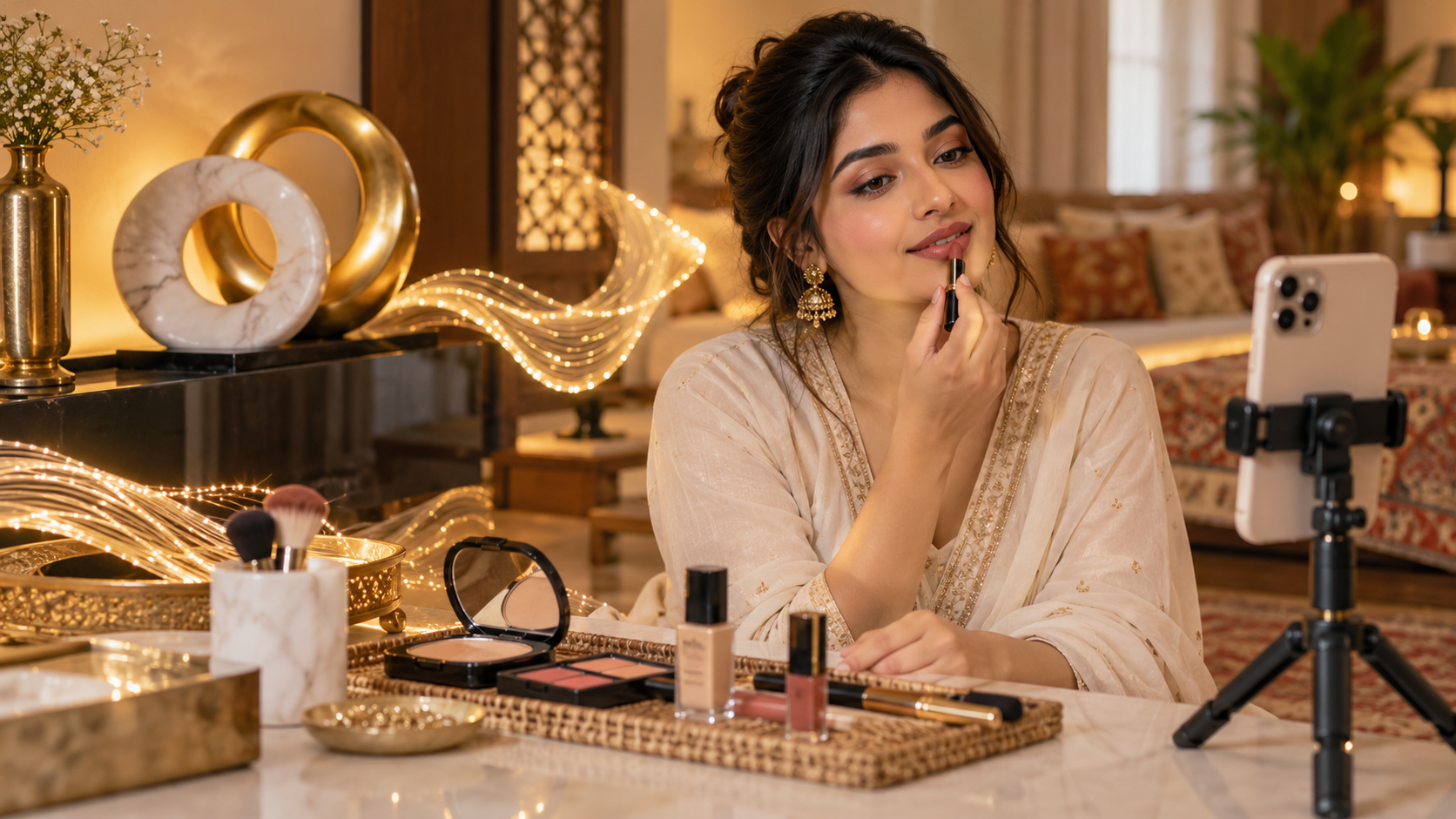
Makeup Influencer Marketing That Drives Product Trials
A makeup Reel can look impressive without helping someone choose the right product. Lighting changes the apparent shade, filters hide texture and the creator never explains which variant they used. The content attracts attention but leaves the purchase decision unresolved.
This guide explains makeup influencer marketing for Indian cosmetics brands. It focuses on creator selection, accurate demonstrations and a clear route from product discovery to sampling, purchases and retained sales.
Build the Campaign Around Product Understanding
Choose the question the content should answer
A foundation launch may need shade and finish demonstrations. A lip product may need clear swatches and application footage. A palette may need a practical look that shows how the shades work together.
Pick one primary question for each asset.
A tutorial should make the product easier to understand rather than merely place it inside a longer routine.
Select creators for useful representation
Use Nano at 1k–10k followers, Micro at 10k–100k and Macro at 100k–1M.
Then assess what each creator can contribute beyond audience size:
- Relevant shade and undertone demonstrations.
- Application skill.
- Clear explanations.
- Audience language and geography.
- Experience producing accurate close-up footage.
A makeup artist and a everyday beauty reviewer can perform different roles within the same campaign.
Explore beauty and skincare creators to begin the shortlist.
Plan an honest filming standard
Ask for consistent lighting and clear product identification. Avoid filters or edits that materially alter the apparent shade, texture or finish.
If the video includes a wear observation, record when it was filmed and relevant conditions. Do not turn one person’s experience into a universal wear-time claim.
Share your products, shades, audience, languages and budget with Influverse. We’ll shortlist relevant creators for you to review and select before agreeing on the demonstrations.
Execute a Product-Trial Campaign
Step 1: Map products to creators
Confirm the specific shade or variant before dispatch.
Keep a record linking the creator, product and content brief so customers can identify what they saw.
Step 2: Write a demonstration brief
| Product Question | Content to Request |
|---|---|
| Which shade is shown? | Labelled swatch and application footage |
| What is the finish? | Clear close-up footage under consistent lighting |
| How is it applied? | A practical demonstration using the product |
| How does it fit a look? | A tutorial with the featured item identified |
| Where can I try it? | Accurate sample, counter or purchase information |
Step 3: Define the trial route
Choose between a sample request, a retail demonstration, a paid trial format or a direct purchase.
State eligibility and availability clearly. A sample request is not a completed trial, and a trial is not a full-size purchase.
Step 4: Set the budget
A sample ₹1,50,000 pilot could allocate:
| Budget Item | Allocation |
|---|---|
| Creator fees | ₹60,000 |
| Production and editing | ₹20,000 |
| Products and logistics | ₹10,000 |
| Usage rights | ₹15,000 |
| Paid distribution | ₹30,000 |
| Coordination and measurement | ₹15,000 |
| Total | ₹1,50,000 |
Confirm actual quotes, rights and taxes.
Step 5: Connect content with the destination page
Link to the relevant shade, product or trial page.
Give customer support the creator references so the team can answer questions such as “Which shade was used in this video?”
Measure Trial Quality and Purchase Outcomes
Track the stages separately:
- Trial or sample requested.
- Product delivered or appointment attended.
- First purchase completed.
- Order retained after cancellation and return checks.
- Repeat purchase observed within a defined period.
If 500 delivered samples lead to 80 tracked retained purchases, the observed sample-to-purchase rate is 16%. That does not prove all 80 purchases were incremental.
Review return reasons and product questions alongside conversion. High purchase volume followed by shade-related returns can indicate a demonstration or product-page problem.
Use the ROI calculator with reconciled sales and actual contribution.
Related deep dive: Jewellery Store Launch in a New City: A 30-Day Plan.
Common Pitfalls to Avoid in India
Using misleading colour or texture presentation
Agree on filming standards and inspect final edits.
Showing only one narrow set of product experiences
Choose representation that helps the intended customers make a decision.
Counting samples as customers
Keep delivery, trial and retained purchase separate.
Hiding the commercial relationship
Follow ASCI’s disclosure guidelines and define paid or barter deliverables clearly.
The Bottom Line
Makeup influencer marketing should help customers understand what they are trying and why it may suit their intended use. Accurate demonstrations can improve the quality of the decision as well as the campaign response.
Start with a focused product question and a measurable trial route. Share your makeup campaign brief with Influverse to review suitable creators and plan the content.
Frequently asked questions
What about: Build the Campaign Around Product Understanding?+
<strong>Choose the question the content should answer</strong>
What about: Execute a Product-Trial Campaign?+
<strong>Step 1: Map products to creators</strong>
What about: Measure Trial Quality and Purchase Outcomes?+
Track the stages separately:
What about: Common Pitfalls to Avoid in India?+
<strong>Using misleading colour or texture presentation</strong>
Keep reading
 Strategy & Agency Guides
- Strategy & Agency Guides
- Beauty, Fashion & Luxury
- Food, D2C & Retail
Jewellery Store Launch: A 30-Day Influencer Plan
- Beauty, Fashion & Luxury
- Strategy & Agency Guides
Lab-Grown Diamond Influencer Marketing in India
- Beauty, Fashion & Luxury
- Strategy & Agency Guides
Diamond Jewellery Influencer Marketing for Premium Sales
- Beauty, Fashion & Luxury
- Strategy & Agency Guides
Gold Jewellery Influencer Marketing That Builds Trust
- Strategy & Agency Guides
- Creators, Platforms & Media
- Beauty, Fashion & Luxury
UGC vs Beauty Influencers: What Should Brands Pay For?
- Strategy & Agency Guides
- Beauty, Fashion & Luxury